History
Columbus: The Good, The Bad, The Ugly
More than five centuries after his historic voyage, Christopher Columbus remains one of history’s most celebrated and controversial explorers. The events of 1492 forever changed the Western Hemisphere.
Staff Writer
12 oct 2026
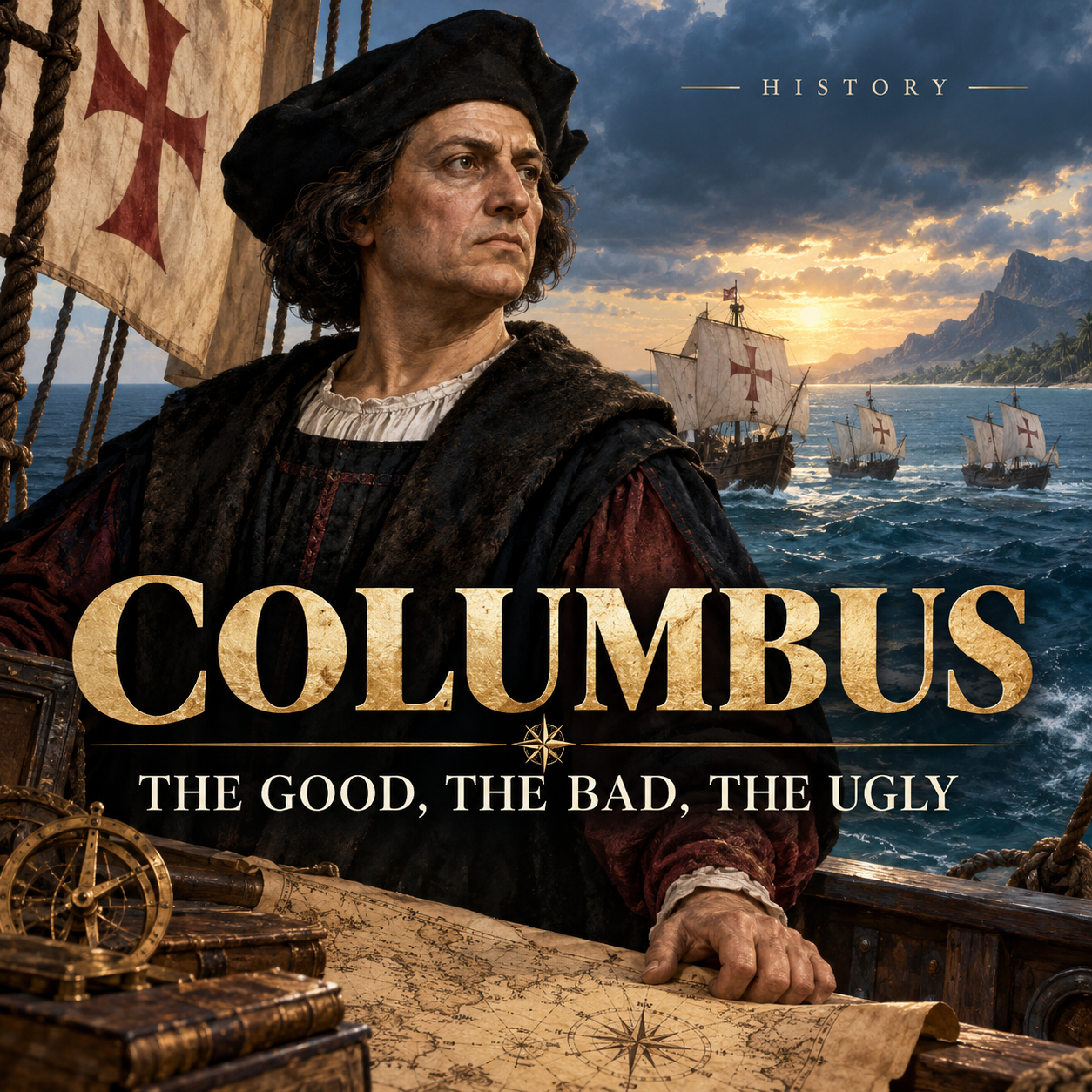
On October 12, 1492, Christopher Columbus and his crew reached an island in the Bahamas after crossing the Atlantic under the Spanish crown. What began as a search for a westward maritime route to Asia became a turning point in world history.
Columbus remains a subject of passionate disagreement. To some, he represents daring navigation, determination, and an important chapter in European and Italian-American heritage. To others, he represents the beginning of colonial conquest, forced labor, and devastating losses for Indigenous communities.
Both the accomplishments and abuses belong in the historical record. Understanding the full story means making room for the good, the bad, and the ugly.
The Good: A Voyage That Changed the World
Columbus won the support of Spain's monarchs, Ferdinand and Isabella, for an expedition west across the Atlantic. His ships, the Niña, Pinta, and Santa María, departed in 1492. The voyage required significant navigational skill and resolve, even if Columbus misunderstood the size of the globe and believed he had reached islands near Asia.
Columbus was not the first person to reach the Americas. Indigenous peoples had lived across the Western Hemisphere for thousands of years, and Norse voyagers reached North America centuries earlier. His expedition's historical importance rests instead in its role in establishing sustained contact, colonization, and exchange between Europe and the Americas.
His 1493 reports circulated widely and helped secure support for three later Atlantic voyages. The consequences reshaped world history.
The Columbian Exchange
The decades following the voyages brought an unprecedented transfer of crops, animals, people, and disease between hemispheres. American crops such as maize, potatoes, and tomatoes eventually transformed diets across the Atlantic. Horses, cattle, wheat, and other Old World species reshaped life in the Americas.
These changes connected distant societies and created new economies and cultural traditions. But the exchange came with epidemics, dispossession, and the forced movement of enslaved people. It cannot be accurately described as wholly beneficial.
The Bad: Ambition, Greed, and Troubled Rule
Columbus's goals included wealth, titles, trade routes, and territorial claims on behalf of the Spanish monarchy. This was an imperial and commercial enterprise, not simply an innocent journey of curiosity.
On Hispaniola, he faced criticism for harsh administration and poor governance. In 1500, a royal representative sent him back to Spain under arrest. Although he later undertook another voyage, his tenure as a colonial governor was deeply troubled.
His record reminds us that skill as a navigator was not the same as wisdom or fairness as a ruler. The criticism was not invented by modern commentators; elements of it came from contemporaries during his own lifetime.
The Ugly: Enslavement and Indigenous Suffering
The most troubling history concerns the treatment of Indigenous communities, including the Taíno of the Caribbean. These people had their own agriculture, societies, traditions, political arrangements, and spiritual beliefs before Europeans arrived.
Columbus and those operating under his authority captured Indigenous people and subjected them to enslavement and coercion. His administration was implicated in systems of forced labor and violent control. Later Spanish colonization compounded these abuses through warfare, exploitation, displacement, and disease.
Epidemics introduced through transatlantic contact caused catastrophic mortality among populations without previous exposure to many Old World illnesses. The Taíno suffered tremendous losses, though their descendants and cultural influences remain part of Caribbean life today.
Responsibility should be assigned precisely. Columbus did not personally direct every abuse committed by later colonial authorities, but some grave abuses occurred on expeditions he led and under the colonial structures he helped establish.
America Had a History Before 1492
In 1492, the Western Hemisphere was already populated by millions of people living in varied societies. Indigenous communities built cities, developed agriculture and trade, maintained systems of government, and passed down rich histories. The Mexica and Inca empires were among the major states of the era, alongside countless other nations and communities.
Recognizing these civilizations does not lessen the consequences of Columbus's crossing. It explains what and whom the Europeans encountered—and why descriptions of Columbus as having discovered an empty world are wrong.
Columbus Day, Indigenous Peoples' Day, and Heritage
Columbus Day became meaningful to generations of Italian Americans as a symbol of heritage, belonging, and the contributions of their communities to the United States. Its national observance also reflects the place of exploration in America's public memory.
Many Native Americans and others observe Indigenous Peoples' Day to honor the cultures that existed long before European contact and to recognize the consequences of conquest and colonization. The observances focus on different aspects of a shared but painful history.
People can recognize the historical significance of the Atlantic crossing without excusing its abuses. They can likewise acknowledge Indigenous survival and suffering without denying that the events of 1492 profoundly shaped the modern world.
Remember the History—All of It
More than five centuries later, the voyages of Columbus remain a pivotal chapter in the history of the Western Hemisphere. They helped launch enduring connections between continents and contributed to transformations in trade, agriculture, politics, faith, and culture. They also opened an era of conquest and exploitation with consequences that remain visible today.
History does not become more meaningful when its uncomfortable chapters are removed. It becomes more meaningful when the full story is understood.
Christopher Columbus remains part of that story: the good, the bad, and the ugly.