U.S.
Whatever Happened to Red Pistachios? The Colorful Snack That Disappeared From America
They stained our fingers, filled snack bowls, and became a familiar sight in stores across America. Then, almost without anyone noticing, those bright red pistachios vanished.
Staff Writer
Oct 22, 2026
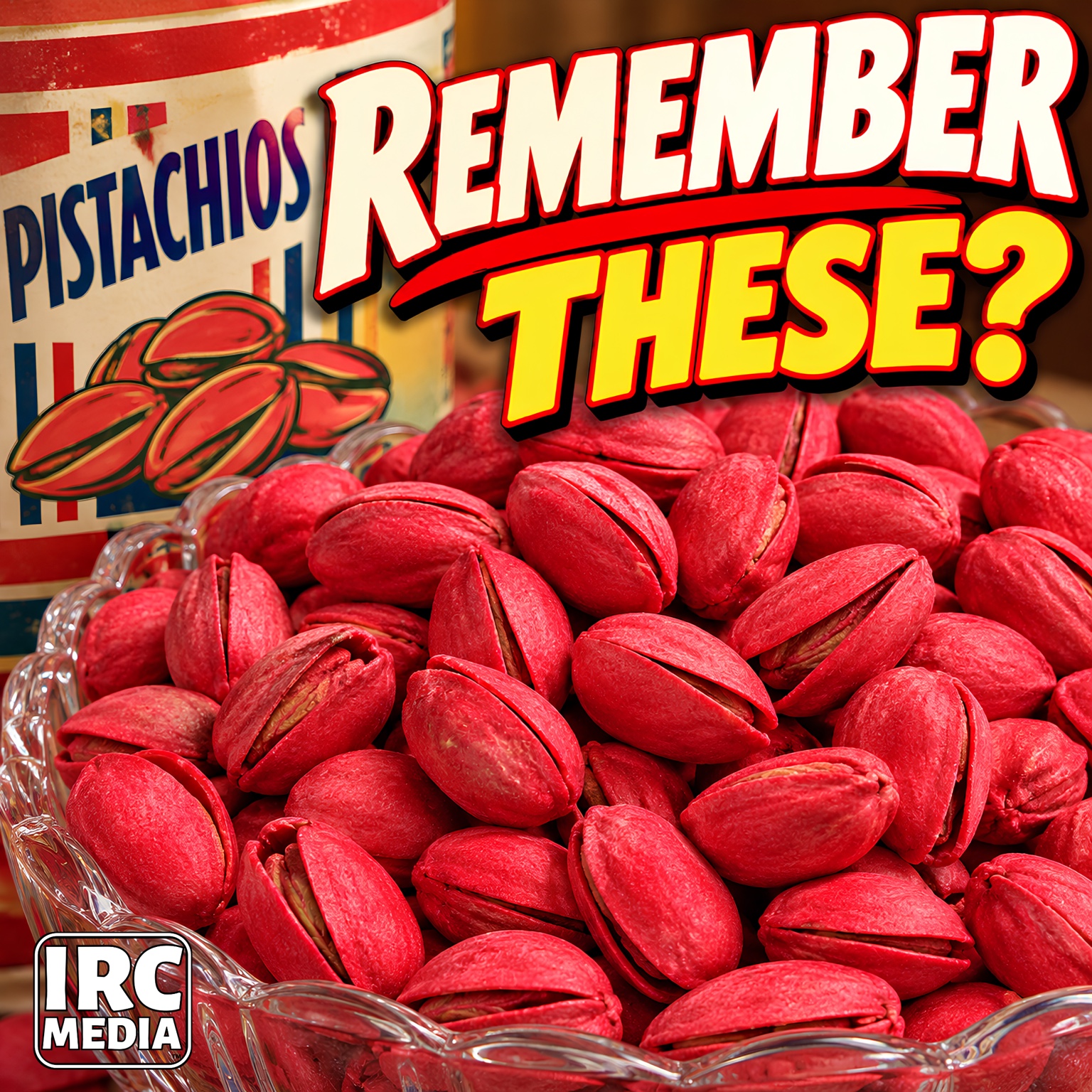
There was a time when eating pistachios meant getting caught red-handed. Literally.
If you grew up during the 1960s, 1970s, or 1980s, chances are you remember those bright, almost unnaturally red pistachio shells. They sat in bowls at family gatherings, appeared in stores and vending machines, and left unmistakable crimson stains on your fingertips.
Sometimes the red dye seemed harder to get off your hands than the shells were to crack.
Today, walk down the snack aisle of nearly any grocery store, and you'll find pistachios in their natural, pale beige shells. The nuts themselves haven't changed much, but something familiar has disappeared.
So, what happened to the red pistachio? Where did it come from? Why was it red in the first place?
The answers involve ancient Persian agriculture, American marketing, international politics, and an agricultural revolution in California.
A Snack With Ancient Roots
Long before pistachios became an American snack-food favorite, they were cultivated across the Middle East, especially in regions of present-day Iran, Syria, and Turkey.
For thousands of years, pistachios were valued as a delicacy and traded across continents. They eventually made their way into Europe and, much later, into the United States.
By the late 19th and early 20th centuries, imported pistachios were becoming familiar to American consumers, particularly in immigrant communities. They gradually found their way into vending machines, restaurants, bars, and neighborhood stores.
But the pistachios that Americans came to recognize looked considerably different from the ones we buy today.
They were red. Very red.
And that color was no accident.
Why Were Pistachios Dyed Red?
Contrary to what some might remember, pistachios do not naturally grow with bright red shells.
The familiar crimson color came from food dye applied during processing.
The explanation begins with the way pistachios were traditionally harvested and handled.
Pistachios grow inside a fleshy outer hull. When the nuts are harvested, that hull needs to be removed promptly. If it remains on the nut too long, natural pigments can stain the hard shell underneath.
In countries where pistachios were traditionally harvested by hand and processed more slowly, staining and discoloration were common.
The nuts inside were still perfectly edible, but their shells didn’t always look particularly attractive.
American processors found a colorful solution: dye the shells red.
The red coloring concealed blemishes and gave the nuts a uniform, eye-catching appearance.
It was a remarkably effective marketing strategy. Instead of appearing imperfect, the pistachios became one of the most visually recognizable snacks in America.
The red shells weren't a different variety, and the dye wasn't responsible for the pistachio's distinctive flavor.
It was largely about appearance.
The Brooklyn Connection: Who Started the Red Pistachio Craze?
Here is where the story gets especially interesting.
One longstanding account traces the popularity of colored pistachios to competing street vendors in Brooklyn, New York, around the turn of the 20th century.
The story involves the Zaloom family, whose descendants later became involved in California's pistachio-processing industry.
According to an account published in the Los Angeles Times in 1986, an earlier generation of the family sold pistachios on Brooklyn streets, where vendors competed for customers by offering different preparations.
One vendor reportedly discovered that coloring pistachios red attracted attention.
The practice caught on, and the brightly colored nuts developed a following.
However, the identity of the first person to dye pistachios red remains uncertain. Historical accounts differ, and the Brooklyn story should be considered part of the snack’s colorful lore rather than a conclusively established origin.
What is well documented is that American processors dyed imported pistachios, both to conceal shell blemishes and to make them more appealing to customers.
Over time, Americans became so accustomed to red pistachios that the color itself became part of the product’s identity.
California Changes Everything
The beginning of the end for red pistachios came from an unexpected place: California’s agricultural industry.
For decades, most pistachios consumed in the United States were imported, with Iran supplying a substantial share.
That began changing after an American botanist named William E. Whitehouse traveled to Persia, modern-day Iran, in 1929 to collect pistachio seeds.
Whitehouse returned with approximately 20 pounds of carefully selected nuts. Researchers eventually developed a commercially successful variety named Kerman, after a city in Iran.
California farmers began establishing commercial pistachio orchards during the 1960s.
In 1976, California produced its first significant commercial crop, approximately 1.5 million pounds.
The state’s growing industry had a major advantage: modern harvesting and processing equipment.
Rather than relying heavily on traditional harvesting practices, California producers could mechanically harvest pistachios and quickly remove their outer hulls.
That prevented much of the staining that had made red dye useful in the first place.
For the first time, large quantities of attractive, naturally colored pistachios could reach American consumers without being dyed.
And the pistachio industry’s familiar red appearance began losing its purpose.
International Politics Helped Change the Snack Aisle
The transformation of America’s pistachio industry also coincided with a major international crisis.
Following the 1979 Iranian Revolution and the seizure of the American Embassy in Tehran, relations between the United States and Iran deteriorated dramatically.
In 1980, the Carter administration imposed a broad trade embargo against Iran, temporarily disrupting the flow of Iranian products into the United States.
That included pistachios.
Although the embargo was lifted in early 1981, the disruption highlighted America’s dependence on imported pistachios.
California growers were already expanding production, and domestic pistachios became increasingly important in the American marketplace.
The political crisis didn’t create the California pistachio industry; its development had begun many years earlier. But the interruption of Iranian imports added another complication to the traditional supply chain.
Later trade restrictions would further affect Iranian pistachio imports.
Meanwhile, California producers were supplying more naturally colored nuts that simply didn’t need to be dyed.
Americans Didn’t Give Up Red Pistachios Overnight
Interestingly, the red pistachio didn’t disappear the moment California entered the market.
Americans had grown attached to the colorful shells.
In 1984, a California Pistachio Commission representative told The Washington Post that approximately half of California’s pistachios were still being artificially colored red.
Think about that for a moment.
California farmers were producing nuts with clean, naturally attractive shells, yet processors were still dyeing many of them because consumers associated red with pistachios.
The color had become a tradition.
But tastes were changing.
Consumers were becoming more comfortable with the natural appearance of foods, and the beige-colored California pistachio was increasingly accepted.
By the early 1990s, only a small portion of California’s pistachio crop was still being colored.
The red pistachio gradually faded from ordinary supermarket shelves, replaced by the natural shells that dominate the market today.
There was no single dramatic announcement. No nationwide farewell. No great pistachio recall.
The red pistachio simply became less common until, for most shoppers, it was gone.
Can You Still Buy Red Pistachios?
Believe it or not, red pistachios haven’t completely disappeared.
They remain available from some specialty nut retailers, including online sellers that offer them specifically for customers seeking a little nostalgia.
Modern versions are generally sold as novelty or specialty products rather than everyday grocery staples.
And despite their different appearance, the red ones are still pistachios underneath.
The shell coloring was never the secret to their flavor.
The real appeal, perhaps, was everything people associated with them.
A Little Piece of Americana
There is something remarkable about how a simple change in agricultural processing quietly erased one of America’s most recognizable snack-food traditions.
An entire generation remembers cracking open bright red shells, piling them on the table, and discovering afterward that their fingertips had turned crimson.
Today’s pistachios may be cleaner, more consistently processed, and easier to find than the imported snacks of decades past.
But they don’t leave quite the same impression.
The old red pistachios were messy, distinctive, and a little ridiculous by modern standards.
And perhaps that’s exactly why people remember them so fondly.
They weren’t just a snack. They were part of an era.
So here’s a question for anyone who remembers those bright red shells: Would you buy a bag of red pistachios today, just for old times’ sake?
Advertisement
IRC Media uses aggregated public data and verified sources; articles reviewed by editorial team to the best of our ability.