Local
60-Day Rabies Alert Active After Bat Tests Positive in Fellsmere
The infected bat was captured near a residential complex off Sonrise Place as health officials urge residents to avoid wildlife and report possible exposures immediately.
Staff Writer
4 de out. de 2026
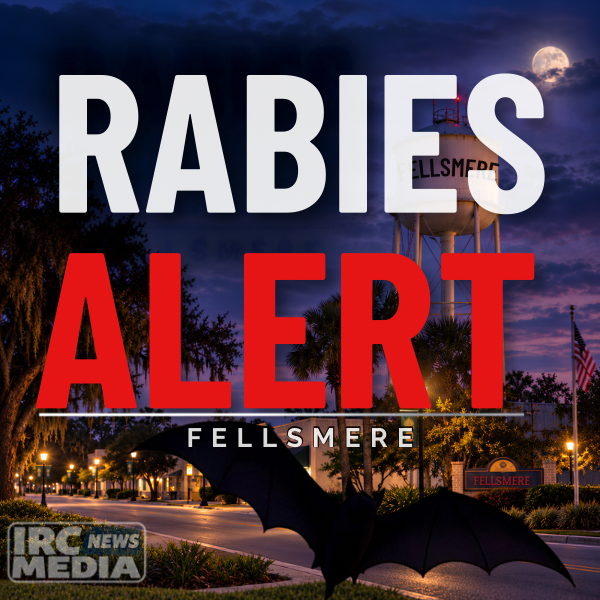
FELLSMERE, Fla. — A confirmed case of rabies in a bat captured near a residential area in Fellsmere has prompted the Florida Department of Health in Indian River County to issue a 60-day rabies alert, with residents being urged to avoid contact with wild animals and act quickly after any possible exposure.
The bat was captured September 24 near the Sonrise Apartments area off Sonrise Place in Fellsmere and subsequently tested positive for rabies. The Florida Department of Health says rabies is present in the local wildlife population.
The location is important for Fellsmere residents because the infected animal was not discovered in a remote preserve or agricultural area. It was collected near a residential complex where people and pets may routinely encounter wildlife.
What Area Is Under The Alert?
The Department of Health has described the advisory as a 60-day rabies alert associated with the Sonrise Apartments area off Sonrise Place. IRC Media did not locate a publicly posted road-by-road boundary description or official alert map for the Fellsmere case during its review Sunday.
Publicly available material reviewed by IRC Media did not provide a more specific expiration date beyond describing the alert as lasting 60 days. The bat was captured September 24, and reports based on information from the local health department began appearing in early October.
Anyone Who Touched The Bat Should Contact Health Officials
Anyone who had physical contact with the infected bat, or believes they may have been exposed to it, should contact the Florida Department of Health in Indian River County at 772-794-7472.
Officials have not publicly identified a confirmed human rabies infection or pet infection associated with the Fellsmere bat in the sources reviewed by IRC Media. The Department of Health nevertheless specifically asks anyone who touched or had contact with the bat to report it.
Why Rabies Exposure Has To Be Treated Quickly
Rabies is a viral disease that attacks the central nervous system of mammals, including humans.
The disease is highly preventable when a potential exposure is recognized and treated promptly. Once clinical symptoms of rabies appear, however, the disease is almost always fatal.
Rabies is most commonly spread through the bite of an infected animal. Exposure can also occur when infected saliva or nervous-system tissue enters an open wound or contacts the eyes, nose or mouth.
Bats deserve particular caution because a bite or scratch can sometimes be difficult to detect. Direct contact with a bat should be medically evaluated when a bite or scratch cannot definitively be ruled out.
What To Do After A Bite Or Possible Exposure
Anyone bitten by an animal or potentially exposed to rabies should immediately wash the affected area thoroughly with soap and running water and seek medical attention.
Florida guidance recommends scrubbing a bite wound with plenty of soap and running water for five to 10 minutes, then contacting a medical provider and the local health department.
Residents should not wait for symptoms to develop.
A health-care provider and public-health professionals can determine whether rabies post-exposure prophylaxis, or PEP, is appropriate. For people who have not previously been vaccinated against rabies, PEP generally includes wound care, human rabies immune globulin and a series of rabies vaccinations.
Protecting Pets And Livestock
Residents should keep dogs, cats, ferrets, horses and other at-risk animals current on rabies vaccinations according to a veterinarian's recommended schedule.
Pets should be supervised outdoors, and residents should avoid leaving pet food or unsecured garbage outside where it can attract wild animals.
If a pet or livestock animal is bitten or attacked by wildlife, owners should contact a veterinarian immediately. Owners should avoid examining an exposed pet with bare hands because infected saliva could remain on its fur or wounds.
For animal-control assistance in Indian River County, residents can contact Indian River County Animal Control at 772-226-4799.
Avoid Bats, Raccoons And Other Wildlife
Residents should avoid handling or feeding wild or unfamiliar animals, particularly bats, raccoons, foxes, skunks, otters, bobcats, coyotes and unfamiliar or stray dogs and cats.
Homes, schools and other occupied buildings should also be checked for openings that could allow bats or other wildlife inside.
Residents should contact animal control rather than attempting to capture suspicious, injured or unusually behaving wildlife themselves.
Another Rabies Alert Is Active On The Treasure Coast
The Fellsmere case comes as health officials in neighboring Martin County are dealing with a separate confirmed rabies case.
The Florida Department of Health in Martin County announced October 1 that a raccoon captured September 27 off South Kanner Highway in Stuart tested positive for rabies.
Martin County officials established a specific geographic alert area bounded by SE Tressler Drive to the south, SE Federal Highway to the east and South Kanner Highway to the west.
IRC Media found no statement from state or county health officials indicating that the Fellsmere bat and Stuart raccoon cases are connected.
The presence of two recent confirmed cases does, however, reinforce standing public-health advice for Treasure Coast residents to avoid direct contact with wild animals and keep pets properly vaccinated.
Fellsmere Residents Should Remain Alert, Not Alarmed
A rabies alert does not mean every animal in the area is infected.
It does mean health officials have confirmed the virus in the local wildlife population and want residents to take reasonable precautions.
Rabies remains highly preventable when a possible exposure is reported and treated before symptoms begin.
Anyone who believes they had contact with the Fellsmere bat or who is bitten or scratched by a potentially rabid animal should contact their medical provider and the Florida Department of Health in Indian River County at 772-794-7472.
Advertisement