


A COLLABORATION TO SPOTLIGHT THE MEDIA THAT MATTERS TO INDIAN RIVER AND BEYOND


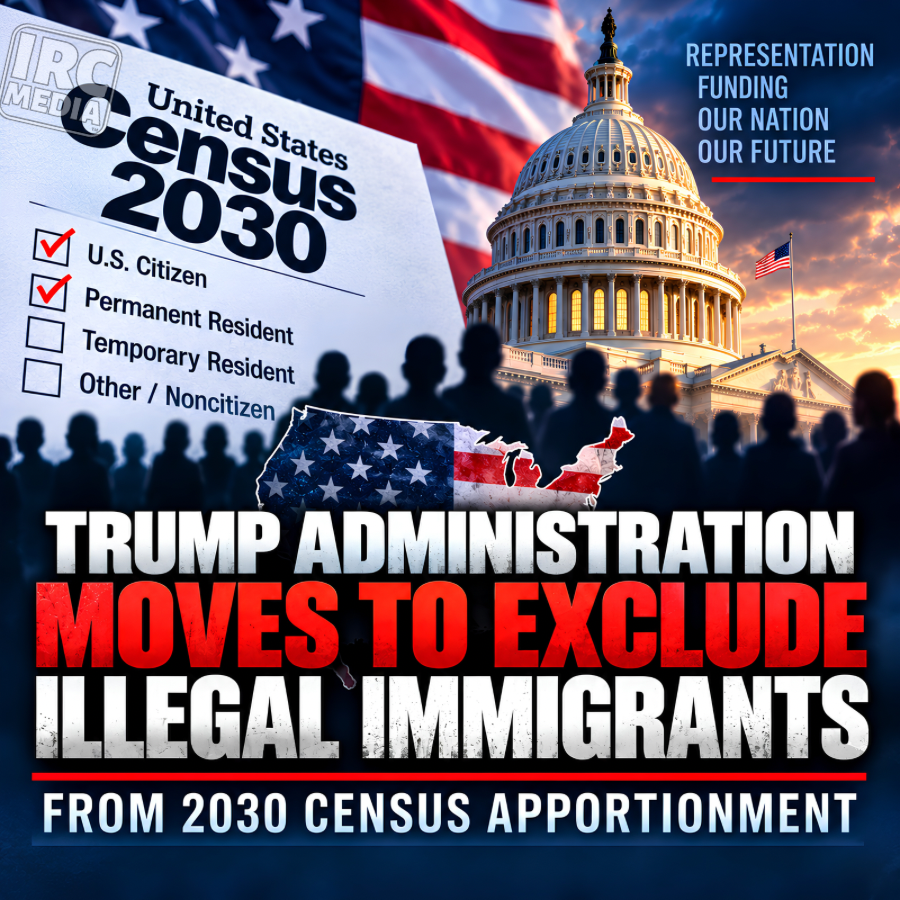
Trump Administration Moves to Exclude Illegal Immigrants From 2030 Census Apportionment
Staff Writer
Sep 10, 2026
The Trump administration is proposing one of the most consequential changes to the U.S. Census in decades: limiting the population counted for congressional apportionment to U.S. citizens and lawful permanent residents.
Under a proposal submitted Wednesday by the U.S. Census Bureau, undocumented immigrants would be excluded from the population count used to determine how many seats each state receives in the U.S. House of Representatives. The proposal would go further by excluding some people who are lawfully in the United States on a temporary basis.
The proposal is open for public comment for 30 days and has not yet become final policy.
Who Should Count For Representation?
The proposal puts a fundamental political question at the center of the 2030 Census debate: Should people who cannot legally vote help determine how many representatives a state receives in Congress?
Supporters of changing the system argue that congressional representation should reflect citizens and lawful permanent residents rather than people who are in the country illegally or only temporarily.
Current Census Bureau policy takes a broader approach. The bureau says all people who have a usual residence in the United States — citizens and noncitizens alike — are included in the resident population count. Eligibility to vote is not currently a requirement for inclusion.
Political Power And Federal Funding
Every 10 years, census population totals are used to divide the 435 seats in the U.S. House of Representatives among the states. Census data also support redistricting and inform the allocation of large amounts of federal funding for roads, schools, hospitals, fire departments and other programs.
Removing millions of noncitizens from the relevant population totals could therefore alter the distribution of congressional representation and federal resources among states. The precise state-by-state effect would depend on the final policy, the population in 2030 and how the government implements the change.
The Constitutional Fight
A major legal battle is expected.
Section 2 of the 14th Amendment says representatives are apportioned among the states according to the “whole number of persons in each State.”
Opponents argue that language requires the government to count residents regardless of citizenship or immigration status for congressional apportionment. Census Bureau historical material notes that decennial censuses have traditionally included residents regardless of legal status.
Supporters of the change are likely to argue that the federal government retains authority to determine who qualifies as a usual resident for census and apportionment purposes and that temporary or unlawful presence should not translate into additional political representation.
The Supreme Court has dealt with related census disputes before. During President Donald Trump's first term, his administration attempted to add a citizenship question to the 2020 Census. The Supreme Court blocked that effort after finding the government's stated rationale for adding the question was insufficient. The new proposal presents a different and potentially broader legal question.
Why Florida Should Pay Attention
Florida has experienced substantial population growth and has gained congressional representation over time. Any nationwide change in who is included in the apportionment population could affect Florida alongside other states with significant immigrant populations.
The effect cannot responsibly be predicted yet. The 2030 population is not known, the proposal is not final, and litigation could substantially change or prevent its implementation.
But the stakes for Florida are significant. The 2030 Census will determine how many U.S. House seats the state receives for the following decade and will provide data used in drawing congressional and legislative districts.
A National Debate Over Representation
Supporters see a straightforward principle: people who are in the country illegally should not increase a state's representation in Congress.
Opponents answer that the Constitution refers to persons rather than voters or citizens and argue that representation has historically been based on population.
Those competing interpretations could eventually place the issue before the Supreme Court.
For now, the proposal remains just that — a proposal. But if adopted and upheld, it could reshape how political power is distributed across the United States after the 2030 Census.