


A COLLABORATION TO SPOTLIGHT THE MEDIA THAT MATTERS TO INDIAN RIVER AND BEYOND


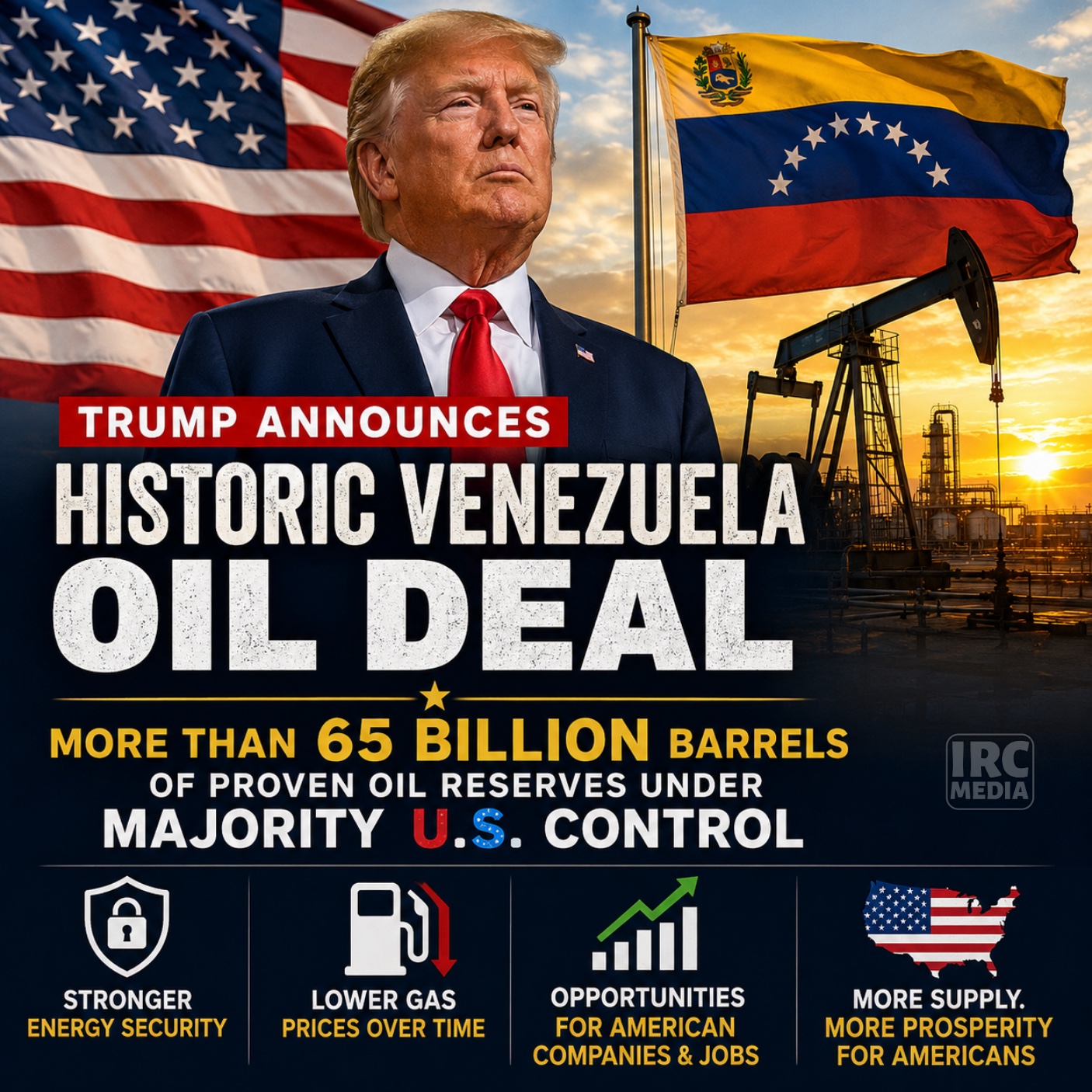
Trump Announces Historic Venezuela Oil Deal That Could Reshape America’s Energy Future
Staff Writer
Aug 30, 2026
UPDATE: New U.S. Rules Clarify How Trump’s Venezuela Oil Deal Can Move Forward
UPDATE — August 30: New U.S. government documents and additional reporting are providing a much clearer picture of how President Donald Trump’s sweeping Venezuela oil agreement could work — and what still has to happen before Americans see the full benefit.
Trump announced that the United States had secured majority control tied to more than 65 billion barrels of proven Venezuelan oil reserves. Subsequent reporting indicates the arrangement centers on 17 strategic oil fields, with the United States receiving a reported 55% effective share of output through a combination of an ownership interest and preferential rights to purchase some production at cost.
That does not mean the United States simply owns 65 billion barrels of Venezuelan oil underground. Venezuela’s interim President Delcy Rodríguez has emphasized that Venezuela retains sovereignty over its natural resources while allowing outside capital, technology and operational expertise to develop them.
Venezuela Targets More Than 1.5 Million Barrels Per Day
Rodríguez says the bilateral project is targeting production of more than 1.5 million barrels per day from the 17 strategic fields and also includes plans to develop eight additional greenfield oil blocks.
Venezuela currently produces roughly 1.25 million barrels per day despite holding the world’s largest proven crude-oil reserves. If the project succeeds, the increase could add a meaningful amount of new supply to global markets while creating a much larger Western Hemisphere energy source for the United States.
Treasury Opens the Door for U.S. Companies
The U.S. Treasury Department’s Office of Foreign Assets Control issued a new round of Venezuela-related licenses on August 27 that provide an important legal framework for the rebuilding effort.
General License 48C authorizes U.S. companies and U.S. persons to provide goods, technology, software and services for Venezuelan oil, gas and petrochemical exploration, development and production, along with work involving electricity generation, transmission, storage and distribution.
That includes equipment repair, maintenance, logistics, insurance, port services and payment-processing activity needed to support energy operations.
General License 48C does not itself authorize creation of new oil-production joint ventures. However, Treasury’s broader Venezuela licensing framework includes separate authorities for investment negotiations and specific oil-sector operations.
Treasury also issued General License 47B, which separately authorizes the sale of U.S.-origin diluents to Venezuela. Those lighter petroleum products are critical because much of Venezuela’s crude is extremely heavy and must be blended before it can be transported and refined efficiently.
Together, the licenses show that Washington is moving beyond political announcements and creating regulatory channels needed for American equipment, expertise, financing and petroleum products to enter Venezuela’s energy sector.
U.S. Already Controls Important Parts of the Oil Flow
Official Department of Energy documentation shows that the United States had already begun marketing Venezuelan crude in global markets earlier this year.
DOE said proceeds from Venezuelan oil sales would first settle in U.S.-controlled accounts at globally recognized banks before being distributed. The White House has clarified that those funds remain sovereign property of Venezuela, with the United States holding them in a custodial governmental capacity.
DOE also said an initial 30 million to 50 million barrels were expected to be marketed, with sales continuing afterward.
The administration has said American technology, expertise and private investment will be used to modernize Venezuela’s deteriorated oil infrastructure and electrical grid — both of which currently limit production.
25 Years or 100 Years?
One significant question remains unresolved.
Associated Press reporting based on a U.S. official describes 100-year development rights associated with the new private venture and the 17 oil fields.
Rodríguez, however, says the bilateral U.S.-Venezuela energy agreement lasts 25 years.
Those two descriptions may refer to different layers of the arrangement — a 25-year government-to-government agreement alongside longer-term private development rights — but neither government has yet publicly released enough of the underlying contracts to establish that conclusively.
What This Could Mean for Americans
The potential American benefit remains significant.
A larger and more dependable supply of crude from the Western Hemisphere could strengthen U.S. energy security, provide additional feedstock for American refineries and reduce exposure to disruptions in more unstable oil-producing regions.
More supply can put downward pressure on crude and gasoline prices over time, but Americans should not expect the full effect immediately. Venezuela’s oil sector has suffered from years of underinvestment, aging equipment and infrastructure problems, and substantially increasing output will require time and private capital.
Still, the project is becoming much more concrete: 17 strategic fields, more than 65 billion barrels of reserves tied to the deal, a production target above 1.5 million barrels per day, eight additional oil blocks, new Treasury licenses enabling U.S. participation, and potentially tens of billions of dollars in private investment.
If implemented successfully, the agreement could become one of the most consequential energy partnerships in the Western Hemisphere — with the potential to strengthen American energy security, create opportunities for U.S. companies and workers, and increase long-term oil supply for American consumers.
---
President Donald Trump announced Friday that the United States has reached a sweeping oil agreement with Venezuela that he says will give America majority control over more than 65 billion barrels of proven Venezuelan oil reserves, potentially transforming the nation’s long-term energy security and eventually putting downward pressure on prices paid by American consumers.
Trump described the agreement as the “biggest oil deal in world history,” saying it was negotiated through Secretary of State Marco Rubio, Defense Secretary Pete Hegseth and Venezuela’s interim president, Delcy Rodriguez, working alongside private businesses.
Trump says the agreement was reached “at no cost to the American taxpayer.”
What 65 Billion Barrels Could Mean for America
The scale of the agreement is difficult to overstate.
Venezuela possesses approximately 303 billion barrels of proven crude-oil reserves, according to the U.S. Energy Information Administration—more than any other country in the world.
The Trump administration’s agreement would give the United States majority control over more than 65 billion barrels of those reserves, according to the president.
For Americans, the potential benefits extend well beyond simply obtaining more oil.
A dependable, long-term source of crude within the Western Hemisphere could strengthen American energy security, reduce exposure to disruptions elsewhere in the world and give U.S. companies an enormous opportunity to participate in rebuilding Venezuela’s deteriorated petroleum infrastructure.
And ultimately, more available oil means more potential downward pressure on energy prices.
Trump says the agreement will “greatly increase” America’s oil supply and substantially reduce gasoline prices over the long term.
That could have consequences throughout the economy. Fuel prices affect trucking, agriculture, manufacturing, airlines, construction and virtually every product transported across the country. If the agreement succeeds in significantly expanding supply and lowering crude prices, American families and businesses could eventually feel the effects far beyond their monthly gasoline bills.
However, those savings are not guaranteed to arrive immediately. Venezuela’s oil infrastructure requires significant investment, and increasing production from some fields could take considerable time.
American Companies Could Play a Major Role
The agreement could also represent an enormous opportunity for American energy companies and workers.
American oil companies and oilfield-service businesses could play an important role in restoring and expanding Venezuela’s petroleum infrastructure, bringing U.S. capital, technology and expertise into one of the world’s largest oil-producing regions.
That creates another potential American benefit: rather than simply purchasing petroleum from a foreign producer, U.S. companies could participate directly in developing the resources.
Less Dependence on Unstable Parts of the World
Perhaps the biggest strategic advantage is geography.
The United States has watched wars and geopolitical instability repeatedly threaten global energy supplies. Bringing tens of billions of barrels of accessible reserves into a U.S.-aligned energy structure could provide America with another enormous supply source much closer to home.
That does not eliminate America’s exposure to global oil markets. Oil remains an internationally traded commodity, meaning events overseas can still affect prices here.
But increasing reliable Western Hemisphere production could give the United States considerably more leverage.
From Venezuelan Decline to American Partnership
Venezuela sits atop the world’s largest proven petroleum reserves, yet years of political turmoil, corruption, underinvestment and deteriorating infrastructure have severely damaged the country’s ability to capitalize on that extraordinary resource.
The Trump administration has spent much of 2026 attempting to fundamentally restructure America’s relationship with Venezuela.
Friday’s announcement potentially takes that strategy dramatically further.
Instead of Venezuela’s immense reserves remaining largely underdeveloped, the agreement could connect American capital, technology and energy companies with one of the greatest concentrations of petroleum anywhere on Earth.
The Details Will Matter
There are still significant questions that need answers.
The complete agreement has not yet been publicly released, and exactly what Trump means by “majority U.S. control” will be critical.
Questions remain about the legal ownership structure, which fields are included, how private companies will participate, how revenues will be divided and how quickly production can realistically increase.
Those details will determine how quickly—or how significantly—the agreement ultimately affects American gasoline and energy prices.
But the scale of what Trump announced Friday is unmistakable.
If the agreement works as envisioned, the United States could gain long-term control over an extraordinary quantity of petroleum while American companies help rebuild production relatively close to U.S. refineries.
For American families facing the consequences of volatile global energy markets, that could ultimately mean greater energy security, increased supply and potentially lower costs for years to come.
And for the United States, it could represent one of the most consequential shifts in Western Hemisphere energy policy in decades.
IRC Media uses aggregated public data and verified sources; articles reviewed by editorial team to the best of our ability.