


A COLLABORATION TO SPOTLIGHT THE MEDIA THAT MATTERS TO INDIAN RIVER AND BEYOND


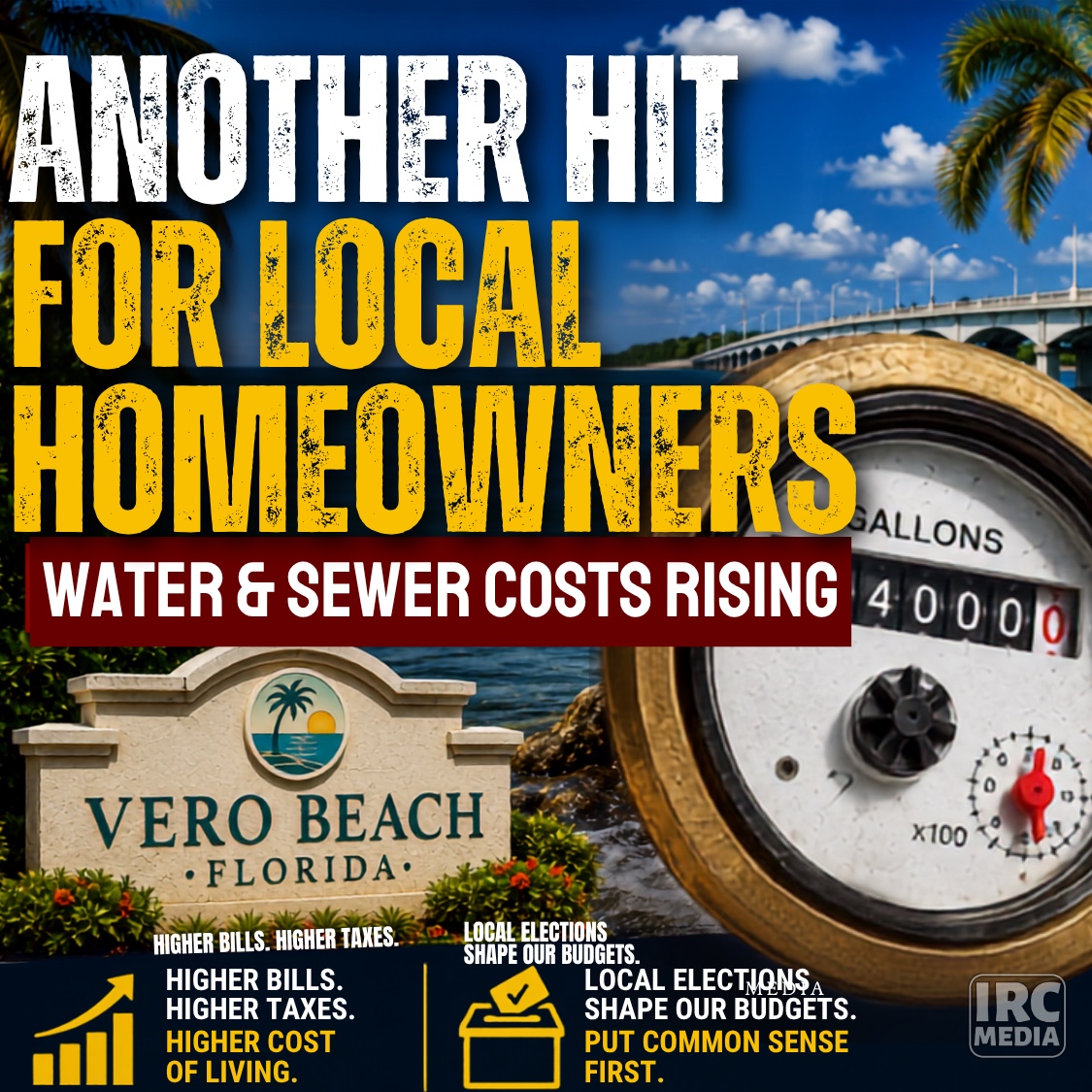
Another Hit for Local Homeowners: Water Rates Rise as Florida Sewer Mandate Looms
Staff Writer
29 de ago. de 2026
For homeowners across Vero Beach and Indian River County, the cost of simply owning and maintaining a home continues to climb.
Property taxes, insurance, utilities and everyday living expenses already consume an increasing share of household budgets. Now, substantial increases in Vero Beach water and wastewater rates are arriving as Indian River County simultaneously prepares more residents for Florida's push to move qualifying properties away from traditional septic systems.
The individual policies have different purposes and different sources of funding. But for the homeowner writing the checks, they can ultimately produce the same result: another expense.
Vero Beach Water and Sewer Bills Going Up
The Vero Beach City Council approved a multiyear increase in water and wastewater rates.
A typical residential customer using 4,000 gallons per month currently pays approximately $83.54 for combined water and sewer service. Under the new rate schedule, that bill is projected to reach $122.45 per month by 2029 — an increase of approximately 46.7 percent.
The increases begin October 1.
Water rates are scheduled to increase 10 percent in fiscal year 2027, followed by 7.5 percent in 2028 and 5 percent in each of the following two years.
Wastewater rates rise even faster: 15 percent in 2027, another 15 percent in 2028, 10 percent in 2029 and 5 percent in 2030.
City officials are confronting a major infrastructure bill. Vero Beach is undertaking a capital improvement program estimated at $217 million through 2030, with construction of a new Water Reclamation Facility serving as its centerpiece.
The city expects approximately $42.3 million in grants to help finance the improvements and plans to issue approximately $125 million in revenue bonds.
Those bonds still have to be repaid. And ultimately, utility customers are a major source of that revenue.
Even Some Septic Customers Will Pay More
One of the more significant changes is a new wastewater “Readiness-to-Serve” charge.
It applies to certain properties receiving Vero Beach water that continue using septic despite public wastewater service being available.
For a typical residential property, that charge begins at $40.85 per month on October 1 and is scheduled to increase to $54.24 by October 2029.
That means some homeowners can face a new monthly wastewater expense even before actually using the city's sewer system.
Florida's Septic Mandate Is Coming
Meanwhile, a much larger change is unfolding throughout Indian River County.
Florida lawmakers passed HB 1379 in 2023 as part of a broader effort to address nutrient pollution and protect waterways including the Indian River Lagoon.
Among its provisions, the law established new requirements affecting septic systems within designated areas.
For affected properties, the approaching 2030 deadline can mean connecting to central sewer where it is available or utilizing an enhanced wastewater treatment system meeting state nitrogen-reduction requirements.
Indian River County is already preparing for that transition.
The county has active septic-to-sewer projects and has scheduled public workshops as part of its countywide sewer conversion effort. County officials say those meetings will explain state requirements, connection requirements, costs, available financial assistance, property-owner responsibilities and the timeline for conversion.
Protecting the Lagoon — But Who Pays?
There is little dispute about the importance of the Indian River Lagoon to this community.
Reducing nitrogen, phosphorus and other pollutants entering the lagoon is an important environmental objective.
But supporting clean water does not eliminate legitimate questions about cost, individual liberty and the expanding financial obligations government can place upon property owners.
A homeowner can support protecting the lagoon while simultaneously asking a simple question:
How much more can the average family afford?
A government mandate doesn't make the underlying expense disappear.
Someone still pays for the pipes. Someone pays for the treatment facilities. Someone pays the debt. Someone pays to abandon or modify existing septic infrastructure.
And eventually that “someone” is frequently the taxpayer, utility customer or property owner.
Property Taxes Are Part of the Bigger Picture
These increases don't occur in isolation.
Indian River County residents are already confronting property taxes, insurance premiums, utility bills, assessments and the rising price of nearly every household necessity.
That makes the debate over property taxes particularly important.
A family doesn't maintain separate wallets for its water bill, property-tax bill, insurance bill and grocery bill. All of that money comes out of the same household income.
Government should look at affordability the same way.
Before imposing another fee, assessment, mandate or tax, elected officials should consider the cumulative financial burden already being carried by the people they represent.
Local Elections Matter
This is also why local elections deserve far more attention than they often receive.
Presidential and congressional races dominate television and social media, but decisions made by city councils, county commissioners and other local officials can have an immediate effect on what residents pay to live in their own communities.
Local elected officials approve budgets. They vote on tax rates. They make infrastructure decisions. They determine spending priorities and, depending on the governmental body involved, can influence utility rates, assessments and how the costs of state mandates are ultimately distributed.
Those decisions can mean real money every month for a working family or retiree.
Residents should pay attention not only to what candidates promise during an election, but how elected officials approach spending once they hold office.
Common Sense Must Come First
Protecting the Indian River Lagoon matters. Reliable water and wastewater infrastructure matters. So does the ability of residents to afford their homes.
Those goals do not have to be mutually exclusive.
Government should pursue necessary infrastructure and environmental improvements while aggressively searching for grants, eliminating unnecessary spending, avoiding excessive debt and protecting homeowners from costs that can reasonably be absorbed elsewhere.
And mandates should receive scrutiny when they interfere with property rights or impose substantial expenses on residents who had little role in creating them.
The guiding principle should be simple: protect our natural resources without forgetting the people who live here.
Less government, lower taxes and greater individual liberty aren't abstract political slogans when a family is deciding whether another $40, $100 or several hundred dollars in monthly expenses fits into its budget.
They become questions of affordability.
Local elections help determine who will make those decisions. Voters should demand leaders willing to put common sense first — protecting essential services and the Indian River Lagoon while recognizing that taxpayers are not an unlimited source of revenue.
Because whether government calls it a tax, rate increase, assessment, connection cost or mandate, the homeowner still has to write the check.
IRC Media uses aggregated public data and verified sources; articles reviewed by editorial team to the best of our ability.