


A COLLABORATION TO SPOTLIGHT THE MEDIA THAT MATTERS TO INDIAN RIVER AND BEYOND


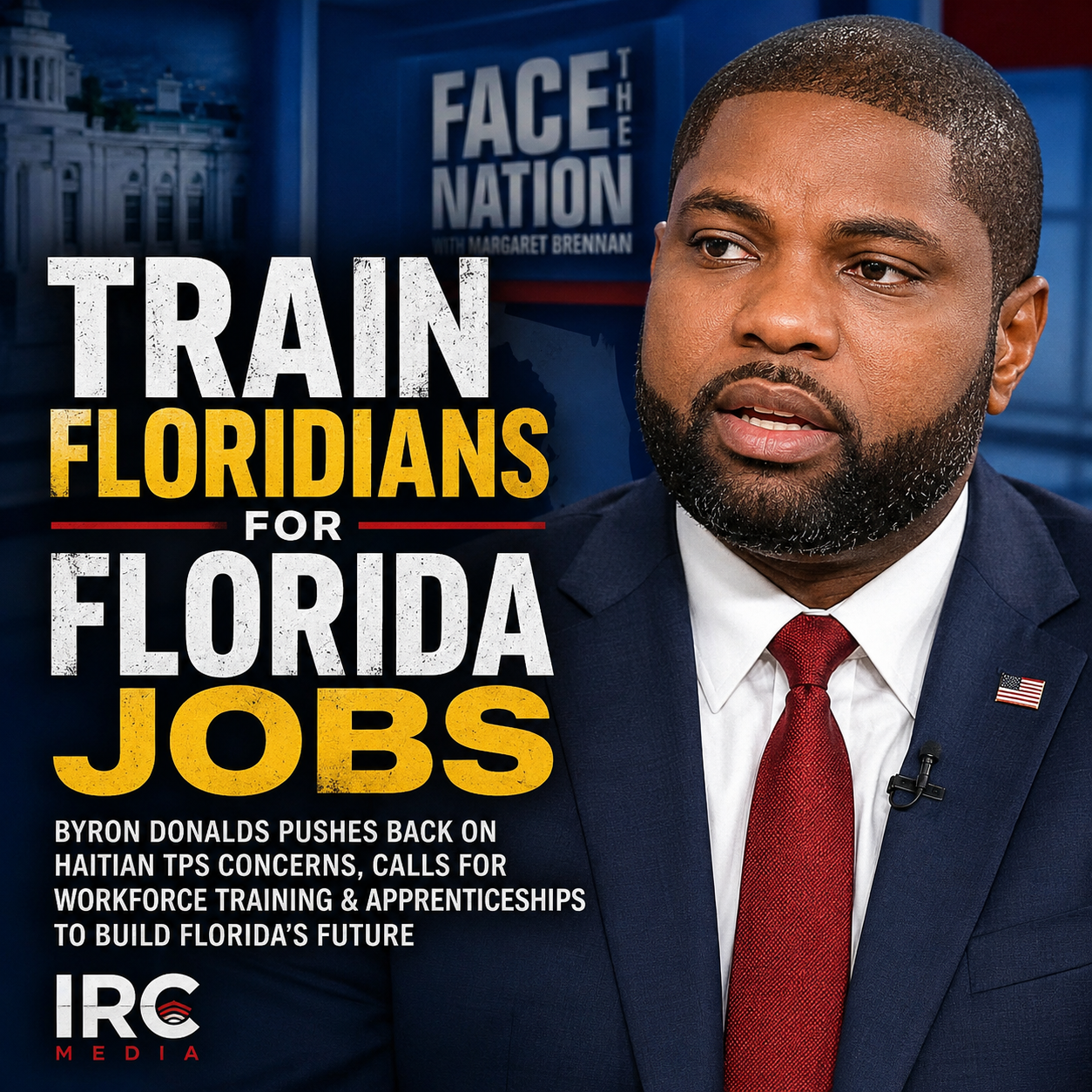
Donalds Pushes Back on Haitian TPS Concerns: Train Floridians for Florida Jobs
Staff Writer
24 de ago. de 2026
Republican gubernatorial nominee Byron Donalds turned a contentious exchange over Haitian Temporary Protected Status into a broader argument for Florida to train more of its own students and workers for healthcare and other high-demand careers.
Donalds appeared Sunday on CBS News’ Face the Nation, where host Margaret Brennan questioned him about the potential workforce consequences of ending Temporary Protected Status for Haitians living and working in Florida.
Brennan cited concerns raised by fellow Florida Republicans, including Reps. Carlos Giménez and Maria Elvira Salazar, about the impact removing Haitian TPS recipients could have on Florida’s workforce, including healthcare.
Donalds did not retreat from his support for ending the temporary protections. Instead, he argued that Florida should develop a stronger pipeline of homegrown workers while the federal government maintains consistent immigration laws.
“We Want to Make Sure That Our Kids…”
Donalds’ first answer focused directly on Florida students. He said Florida needs to ensure young people leaving high school have access to internships, apprenticeships and workforce training that can prepare them for healthcare and other careers.
That proposal is part of Donalds’ LaunchPad initiative, a workforce-development plan that would connect high-school students with employers and career-training opportunities.
Donalds noted that while many Florida graduates enter colleges and universities, others leave high school without a clearly defined pathway into a successful career. LaunchPad is intended to change that.
Under the proposal, high-school juniors and seniors could participate in apprenticeships, internships and other work-based learning programs designed around industries that need workers.
Brennan Raises the Immediate Problem
Brennan pushed back on the timetable. While Donalds described a long-term strategy for developing Florida workers, Brennan argued that the potential loss of existing Haitian workers could create an immediate healthcare staffing problem.
Donalds responded by expanding his proposal beyond high-school students. He said Florida should “super charge” adult education and CareerSource programs so people already in the workforce can transition into industries experiencing shortages.
That distinction matters. Donalds isn't proposing that high-school students alone replace workers who could leave the labor force. His proposal combines high-school career preparation with adult retraining and workforce-development programs.
The disagreement was ultimately about more than whether Florida needs healthcare workers. It was about how Florida should produce them.
Donalds Connects Workforce Shortages to Immigration Policy
Donalds then broadened the argument to federal immigration policy. He told Brennan that the country cannot maintain an inconsistent border and immigration system and then use labor shortages as justification for continuing temporary immigration programs indefinitely.
“You cannot let the borders of our country be blown wide open” and then argue that particular industries need those workers, Donalds said.
He blamed Biden-era immigration policies for contributing to the problem and argued that the United States needs a stable standard for immigration and naturalization.
Donalds also specifically named his Democratic gubernatorial opponent, David Jolly, while criticizing Democratic immigration policies — another indication that the November general-election battle is already taking shape.
“Margaret, I Just Gave You the Plan”
Brennan continued pressing Donalds on what Florida would do about an immediate shortage of healthcare workers. Donalds objected to the suggestion that he had not answered the question.
“Margaret, I just gave you the plan.”
Brennan acknowledged his proposal but responded that implementing it would take time.
Donalds reiterated that Florida needs to give children currently in school and young adults already working opportunities to enter those careers and earn enough money to build what he called the American dream.
The exchange became one of the sharper moments of the interview, but behind the back-and-forth was a substantive policy disagreement.
One approach emphasizes retaining immigrant workers already filling critical positions. Donalds is arguing for something different: maintain immigration enforcement while aggressively expanding Florida's domestic workforce pipeline.
TPS: Temporary or Effectively Permanent?
Donalds also challenged what he views as the transformation of Temporary Protected Status into something it was never intended to become.
TPS allows qualifying foreign nationals to temporarily remain and work legally in the United States when conditions in their home countries make returning unsafe.
Donalds argued that “temporary” has increasingly lost its meaning. He said immigration programs cannot simply continue indefinitely without creating incentives that make returning people to their home countries increasingly difficult.
Haiti remains deeply troubled by gang violence and political instability. Donalds said he has met with representatives of Haiti's transitional government and pointed to efforts underway to improve security there.
But he maintained that difficult conditions cannot automatically turn temporary immigration protection into permanent residency.
A Larger Question for Florida
The exchange provides Florida voters with a clearer picture of how Donalds would approach one of the state's persistent challenges: finding enough skilled workers for critical industries.
His answer isn't simply immigration enforcement. It's workforce development.
LaunchPad would place greater emphasis on apprenticeships and employer-driven training for students. Donalds also wants adult education and CareerSource programs expanded to help existing workers move into industries that need them.
The proposal will not eliminate the immediate concerns raised by Brennan and other Florida Republicans about losing existing workers. Developing new nurses, technicians and other skilled employees takes time.
But Donalds' position is now clear.
Florida should not build a permanent workforce strategy around a temporary immigration program.
He wants Florida to build the workers instead.
IRC Media uses aggregated public data and verified sources; articles reviewed by editorial team to the best of our ability.