


A COLLABORATION TO SPOTLIGHT THE MEDIA THAT MATTERS TO INDIAN RIVER AND BEYOND


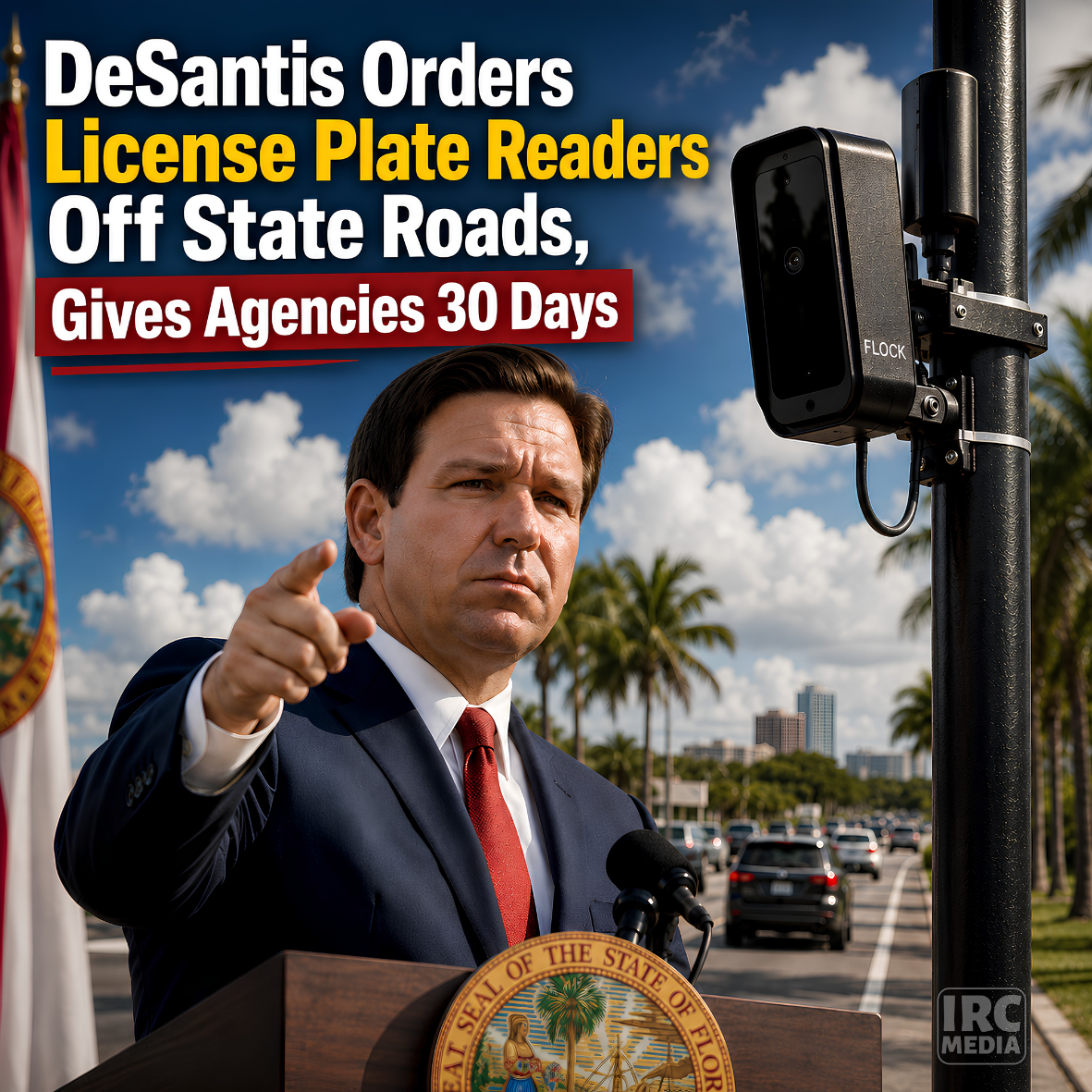
DeSantis Orders License Plate Readers Off State Roads, Gives Agencies 30 Days
Staff Writer
31 août 2026
BREAKING UPDATE — SHERIFFS GO FURTHER THAN STATE ROAD ORDER
At least 13 Florida counties have now suspended, discontinued or moved to end their use of automated license plate readers, as the fallout from Gov. Ron DeSantis’ crackdown on the technology rapidly spreads across the state. Hours after Florida moved to revoke permits for license plate readers in state highway rights-of-way, sheriffs began going further — shutting down or suspending their agencies’ use of the technology altogether.
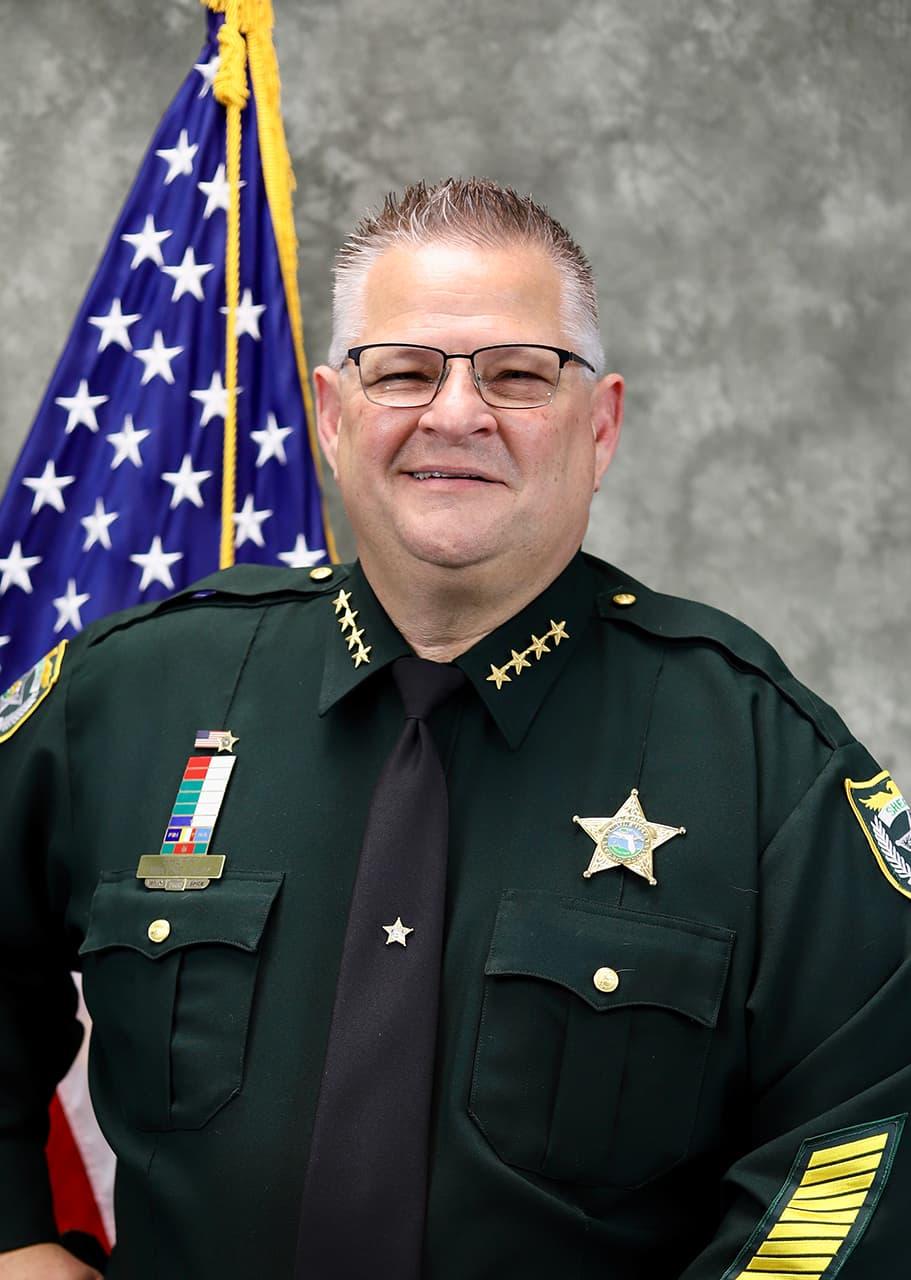
Brevard County Sheriff Wayne Ivey announced that his office terminated its use of Flock cameras effective immediately and suspended BCSO access to the broader Flock database throughout Brevard County, including data generated by cameras on private property. Ivey said the cameras have helped solve serious crimes, but concerns over how the company collects information and who else can access it require stronger guardrails.
Putnam County Sheriff H.D. “Gator” DeLoach ordered all 18 of his agency’s readers disconnected immediately and removed within 30 days. Jacksonville Sheriff T.K. Waters went beyond the FDOT directive and ordered the Jacksonville Sheriff’s Office to discontinue LPR technology throughout Duval County effective immediately.
Similar shutdown or suspension announcements have now emerged from sheriffs in Nassau, Clay, Liberty, Volusia, Franklin, Wakulla, Jefferson, Baker and Bradford counties. Leon County Sheriff Walt McNeil separately suspended his office’s use of automated license plate recognition technology while seeking stronger oversight and accreditation standards.
The rapid series of announcements underscores how quickly the issue has expanded beyond cameras physically located on state roads. FDOT’s action applies to readers in state highway rights-of-way; the sheriffs’ decisions can reach much further by ending agency programs or database access countywide.
Bradford County Sheriff Gordon Smith said his office would stop using LPR technology anywhere in Bradford County effective immediately. Baker County Sheriff Scotty Rhoden likewise announced that his office would discontinue the technology, saying maintaining public trust is as important as the investigative value of the cameras.
The growing statewide response also sharpens the question here on the Treasure Coast: whether local agencies will simply comply with FDOT’s state-road removal order or reconsider their broader participation in interconnected license-plate-reader networks.
IRC Media is continuing to track additional sheriff and police announcements as Florida’s response develops.
---- lorida is moving to remove automated license plate readers from state highway rights-of-way, giving local law enforcement agencies 30 days to take down devices installed under permits issued by the Florida Department of Transportation.
The action follows growing scrutiny from Gov. Ron DeSantis over the rapid expansion of automated license plate reader systems, including cameras commonly associated with Flock Safety.
FDOT REVOKES EXISTING PERMITS
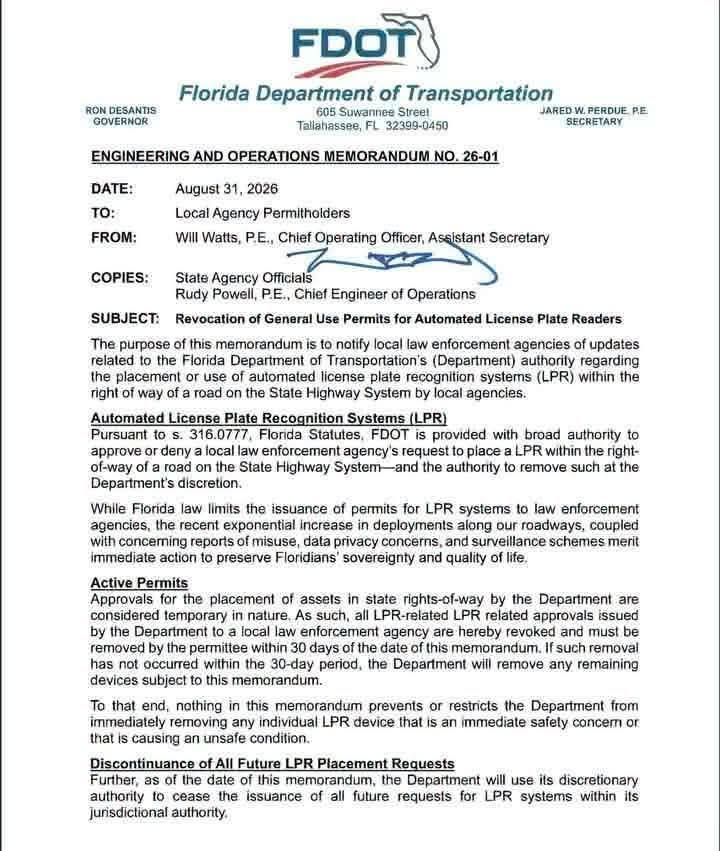
Florida Department of Transportation memorandum revoking permits for automated license plate readers in state highway rights-of-way.
Source: Florida Department of Transportation memorandum provided to IRC Media.
In an Engineering and Operations Memorandum dated August 31, 2026, FDOT notified local agency permit holders that all approvals previously issued for automated license plate recognition systems within rights-of-way on the State Highway System are revoked.
The memo states that agencies must remove the affected readers within 30 days. If they do not, FDOT says the department will remove any remaining devices itself.
FDOT also says it will stop issuing future requests for license plate reader systems within its jurisdiction.
The order applies specifically to systems installed within state highway rights-of-way. It does not automatically remove every automated license plate reader operating on county roads, city roads or private property.
PRIVACY AND SURVEILLANCE CONCERNS
FDOT cited what it described as an “exponential increase” in deployments along Florida roadways, along with reports involving misuse, data privacy concerns and surveillance schemes.
DeSantis has increasingly focused on the privacy implications of the technology while still acknowledging that license plate readers can be useful law-enforcement tools.
The governor has argued that technology used to pursue criminals should not become a system capable of routinely tracking the movements of ordinary Floridians.
The debate has intensified nationally as communities question how long license plate data is retained, who can search it and how information can be shared across jurisdictions.
WHAT THE ORDER MEANS LOCALLY
For Indian River County and the Treasure Coast, one of the biggest unanswered questions is how many locally operated license plate readers currently sit within FDOT-controlled rights-of-way.
Those cameras would now fall under the new removal directive even if they are owned or operated by a local sheriff’s office, police department or municipality.
The order does not necessarily affect readers located on purely local roads outside FDOT jurisdiction, meaning the technology could remain in use in many locations even after cameras along state roads are removed.
That makes the next phase of the story local: which cameras are affected, where they are located and whether Treasure Coast agencies plan to continue using automated license plate readers elsewhere.
A BROADER FLORIDA DEBATE
Florida’s decision comes amid a broader national backlash against automated license plate reader networks.
Supporters say the systems help investigators locate stolen vehicles, identify suspects, find missing people and solve serious crimes.
Critics argue that large networks of interconnected cameras can create detailed records of innocent motorists’ movements and raise significant questions about government surveillance, private data collection and access to information.
DeSantis has suggested Florida lawmakers may need to consider additional statewide restrictions on the technology.
For now, FDOT’s order creates an immediate deadline: local agencies with permitted automated license plate readers inside state highway rights-of-way have 30 days to remove them.
IRC Media will continue following how the order affects Indian River County, Sebastian, Vero Beach, Fellsmere and other Treasure Coast communities.