


A COLLABORATION TO SPOTLIGHT THE MEDIA THAT MATTERS TO INDIAN RIVER AND BEYOND


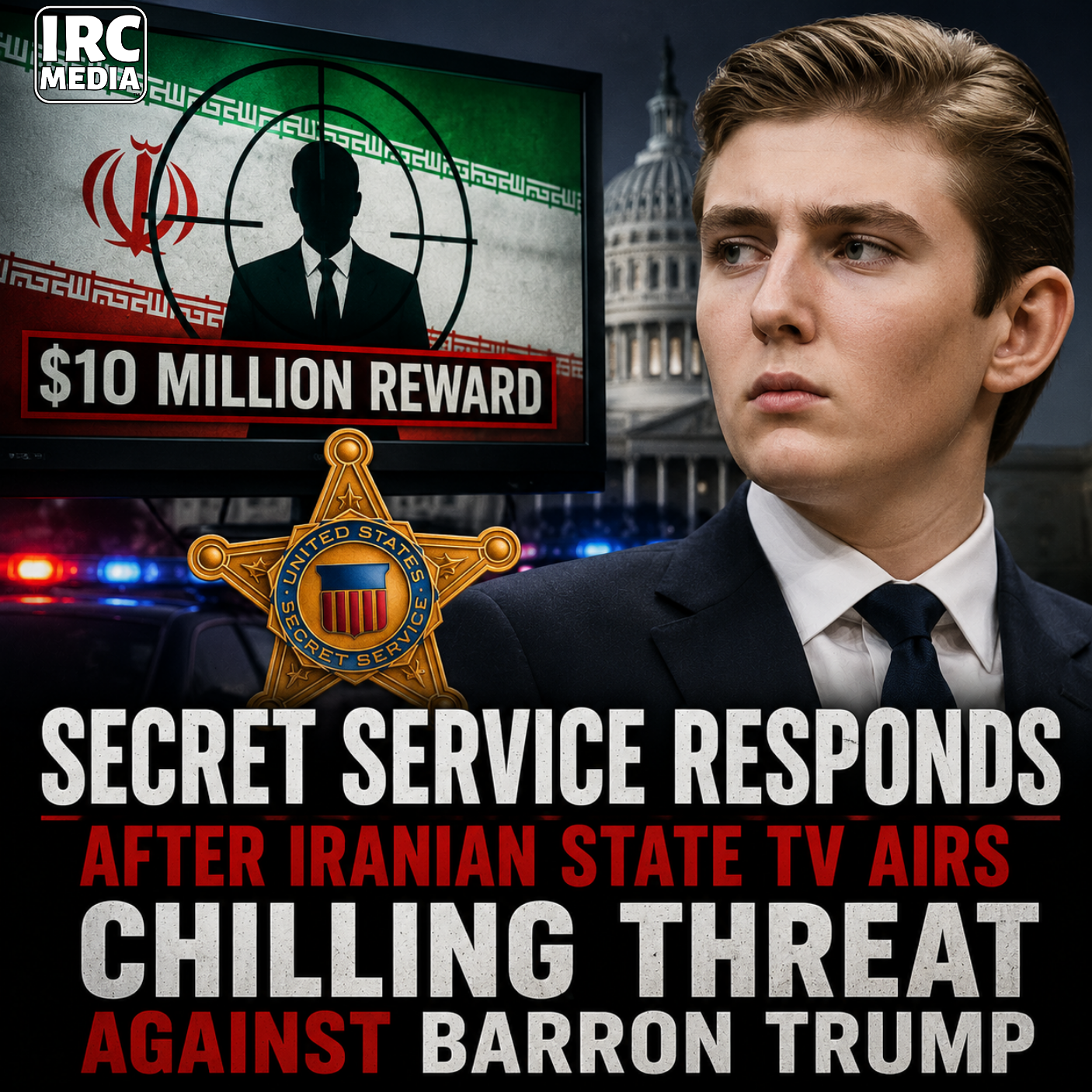
Secret Service Responds After Iranian State TV Airs Chilling Threat Against Barron Trump
Staff Writer
25 août 2026
Iranian state television aired a disturbing video targeting President Donald Trump’s 20-year-old son, prompting a response from the U.S. Secret Service as tensions between Washington and Tehran continue to escalate.
The U.S. Secret Service confirmed Tuesday that it is aware of the video, which appears to threaten Barron Trump and reportedly depicts locations he might frequent.
The video also suggests there could be a $10 million reward connected to targeting Barron. That claim has not been independently verified.
Secret Service Confirms It Is Aware
Secret Service spokesman Nate Herring said the agency is aware of the video and investigates anything that can be perceived as a threat toward its protectees.
The agency declined to discuss protective intelligence or any specific security measures, citing operational security.
That is standard practice for the Secret Service, which generally does not publicly disclose specific threat assessments or changes to protective operations.
Iranian Broadcast Focuses on Barron Trump
Reporting on the Iranian state-media segment says the video focuses specifically on Barron and depicts locations where he might be found.
The material reportedly attempts to portray the president’s son as being monitored despite Secret Service protection.
The broadcast also suggests a $10 million reward.
Those claims — including any assertion that Iranian operatives are successfully tracking Barron or that an actual bounty has been funded — have not been independently established.
What is confirmed is that Iranian state media aired the threatening material and that the Secret Service has publicly acknowledged it.
Threats Against Trump’s Family Escalate
The Barron Trump video comes amid a broader pattern of threatening rhetoric from Iranian media aimed at President Trump and members of his family.
Iran has publicly directed threats toward Trump for years, particularly following the 2020 U.S. strike that killed Iranian General Qasem Soleimani.
The decision to focus specifically on the president’s son marks another escalation in that rhetoric.
Barron Trump does not hold elected office and does not serve in the administration. He is nevertheless a Secret Service protectee as a member of the president’s immediate family.
Propaganda — or a Credible Threat?
That is one of the most important unanswered questions.
Iranian state media frequently broadcasts aggressive propaganda against the United States and its leaders.
But American security agencies cannot simply dismiss material that appears to discuss killing a member of the president’s family.
Threatening propaganda and an actionable operational threat are not necessarily the same thing. Determining which category this falls into is the responsibility of federal protective and intelligence agencies.
Why the $10 Million Claim Needs Caution
Reports describing the Iranian broadcast say it suggests there may be a $10 million reward connected to targeting Barron Trump.
That allegation is explosive, but it should not be presented as an independently established bounty.
At this point, reporting confirms that the broadcast referenced or suggested such a reward. That is different from independently proving that $10 million has actually been funded, authorized or made available.
The distinction matters when reporting claims originating from the state media of a hostile foreign government.
A New Line in the U.S.–Iran Confrontation
Whatever the intent behind the broadcast, publicly targeting the president’s son pushes the confrontation into deeply personal territory.
Political disputes between governments are one thing. State-controlled media airing material that appears to threaten an American president’s child is another.
The Secret Service has now confirmed that it is paying attention.
Whether investigators ultimately determine the broadcast represents propaganda, an actionable threat or something in between may never be publicly disclosed.
But one thing is clear: Iranian state-media threats are no longer focused only on President Trump or members of his administration. His family is now directly part of the rhetoric.
What do you think? Should the United States treat a threat broadcast by another country’s state-controlled television as an official threat from that government?
IRC Media uses aggregated public data and verified sources; articles reviewed by editorial team to the best of our ability.